
Mental Health Support for Young Men
WE KNOW WHAT YOUNG MEN TODAY ARE UP AGAINST.
Anxiety. Trauma. ADHD. Defiance. Lives that haven’t quite launched.
The challenges young men face today are often layered and rarely fit in one box.
Our work treats the whole person — clinically, physically and emotionally and every programme is built around the individual after a comprehensive assessment.
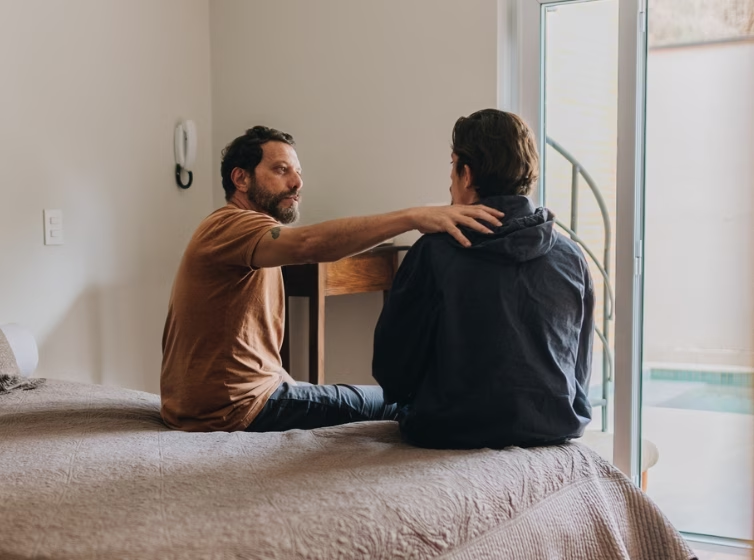

Anxiety
Anxiety in a young man often shows up as avoidance, irritability and physical symptoms long before it shows up as “anxiety”.
We use CBT, mindfulness and graded exposure inside a structured residential day — building tolerance for the things he’s been avoiding, not relief from them.
— SIGNALS FAMILIES NOTICE

TRAUMA & PTSD
Trauma reshapes how a young man reads the world, his own body and the people around him.
Our work is paced — safety and stabilisation come before any deep work, then evidence-based modalities (CBT, mindfulness, somatic awareness) within a setting that supports recovery.
— SIGNALS FAMILIES NOTICE

ADHD
ADHD isn’t a focus problem — it’s a regulation problem.
Combined with daily structured physical training, evidence-based therapy and real-world life-skills work in cooking, budgeting and routine, ADHD becomes a system to work with — not a deficit to
apologise for.
— SIGNALS FAMILIES NOTICE

OPPOSITIONAL DEFIANT DISORDER
PUSH BACK.
A young man with ODD has often spent years being told he is the problem.
Our work begins from a different premise — the relationship comes first, and the behaviour follows. Group sessions, mentorship from staff who don’t flinch, and family work running in parallel.
— SIGNALS FAMILIES NOTICE

FAILURE TO LAUNCH
“Failure to launch” is the polite phrase for what happens when adult life feels unreachable — and home becomes the only safe place left.
Twelve weeks of structured routine, real work in cooking and community contribution, daily physical and therapeutic work, with a peer group all working on the same thing.